BTCB2 is a young and controversial proof-of-work market built around a Bitcoin-derived chain that changed its mining algorithm from SHA-256d to BLAKE2b. That change opened the network to Sia-class BLAKE2b ASICs, including the configurations sold as CAEU04, CAEU14 and ARI31. The opportunity is unusual: hardware can be bought for direct BTCB2 mining, or used in a separate hashrate-rental arrangement that settles in BTC. The risk is equally unusual. The asset trades on small venues, market depth is limited, reward maturity is long, and the name BTCB2 is not used consistently across project pages and exchanges. This review separates verified protocol facts, seller-listed hardware specifications and the dated ForMiners commercial calculation so that a buyer can see what is known and what must be reconfirmed before payment.
Offer dated 18 October 2026
Most earlier BTCB2 units are nearly sold out. Confirm the current batch.
Our current offer is HS5T, 5.3 TH/s, with stated power consumption of 1,500 W, at $2,700 or €2,450. These are two quoted commercial prices, not an exchange-rate calculation. Most of the other units from the earlier offer are nearly sold out; request a fresh stock confirmation rather than assuming the older CAEU04, CAEU14 or ARI31 terms remain available.
What BTCB2 is — and why the algorithm name matters
The chain split from the shared Bitcoin history after block 961,631. Its first BLAKE2b block was 961,640 on 30 August 2026. From that point, conventional SHA-256 Bitcoin miners could not produce valid blocks on this branch. The correct algorithm name is BLAKE2b, often described by hardware sellers as BLAKE2b-Sia. It is not Blake2s. The distinction is operational: an incompatible ASIC cannot be converted by changing a pool address or a menu option.
Naming is not fully standardised. The canonical site presents the chain as Bitcoin with BLAKE2b; some technical material uses Bitcoin BIP110 and ticker BIP110; mining and market services commonly use BTCB2, while NeoxEX displays XBT but uses BTCB2 in its API. Treat the fork as a separate asset and separate network from Bitcoin mainnet. Wallet, exchange, accounting and mining records should never rely on a familiar address format alone.
- Shared history ends at the fork; the post-fork assets are economically separate
- BLAKE2b began at height 961,640
- SHA-256d Bitcoin ASICs are not compatible
- Confirm the chain, ticker and deposit status with every service
Three BLAKE2b configurations for different budgets
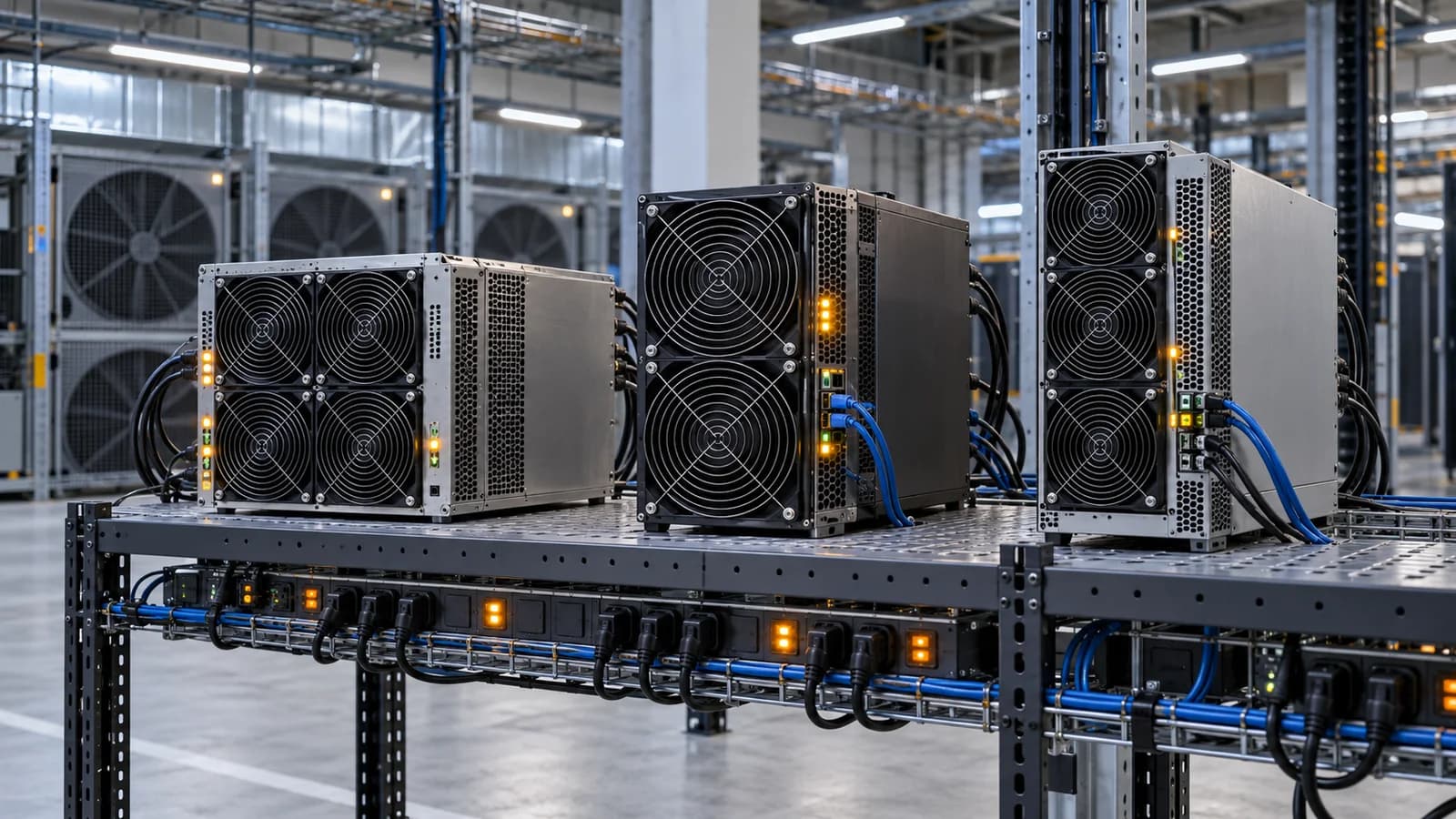
The current ForMiners offer contains three air-cooled units. CAEU04 is listed at 11.8 TH/s and 3,150 W, CAEU14 at 14 TH/s and 3,400 W, and ARI31 at 15.8 TH/s and 3,450 W. On those figures, normal-mode efficiency is about 267, 243 and 218 J/TH respectively. ARI31 therefore has the strongest listed normal-mode efficiency, while CAEU04 requires the lowest purchase budget. These are seller-supplied profiles, not measurements from a ForMiners laboratory.
Third-party listings also show energy-saving profiles, but firmware, power supply, voltage, temperature and used-unit condition can materially change results. The exact batch, operating mode, controller, PSU, repair history, noise, inlet temperature limits and warranty route must be written into the quotation. A name such as CAEU14 is not enough to approve a continuous 24/7 electrical load.
- CAEU04: 11.8 TH/s — 3 600 €
- CAEU14: 14 TH/s — 4 250 €
- ARI31: 15.8 TH/s — 4 800 €
- Delivery within 2 weeks
- Prices updated: 7 October 2026
Two monetisation routes, but neither is guaranteed income
The first route is direct BTCB2 mining through a compatible pool. The miner earns a share of the chain's block rewards, but the value depends on pool luck and fees, network difficulty, uptime, rejected shares, exchange price and whether deposits and withdrawals are working. The second route is a separate hashrate-rental contract that pays in BTC. Rental is not a feature of the BTCB2 protocol; it introduces counterparty, contract, settlement and renewal risk, so the operator and payout terms must be reviewed independently.
ForMiners' calculation dated 24 September used electricity at €0.098/kWh and showed daily net estimates of €30.57 rental or €44 direct for CAEU04, €37.06 or €53 for CAEU14, and €42.74 or €60.73 for ARI31. These are dated scenarios, not today's promise. Price, difficulty and the rental rate can change before equipment is delivered.
- Rental route: BTC settlement under a separate commercial agreement
- Direct route: BTCB2 rewards with network and liquidity exposure
- Compare contract enforceability as carefully as the displayed daily number
- Never calculate payback from a single day's result
Block 979,920 is not a universal unlock date
Current Bitcoin Knots 29.4.2 documentation says coinbase outputs created at height 973,440 or later need 6,480 confirmations, approximately 45 days, before they can be spent in a block. The first affected reward reaches that threshold around height 979,920. A reward mined later unlocks later: for example, a coinbase at 974,500 matures around 980,980. It is therefore more accurate to describe a rolling maturity window than one date when all newly mined BTCB2 becomes liquid.
This distinction matters for cash flow. A pool can account for or allocate a reward when a block is found, but spendability remains governed by the chain. B2Pool shows the unlock height per block, while Mining-Dutch currently warns that PPS is unavailable because of the 45-day window. Pool accounting, payout thresholds and orphan risk must be included in the operating model.
- New rule starts from coinbase height 973,440
- Maturity: 6,480 confirmations, roughly 45 days at target spacing
- Unlock height equals the mined block height plus 6,480
- Pool balance and spendable wallet balance are not the same thing

Where to track BTCB2 price and why one quote is not enough
BTCB2 is traded on small venues rather than the deepest global exchanges. NonKYC lists a BTCB2/USDT market, while NeoxEX lists BTCB2/USDC and displays the asset as XBT. During the editorial check on 29 September 2026, Minerstat showed about $344 per BTCB2 and roughly $193,000 in reported 24-hour volume; the NeoxEX market page showed a higher USDC quote. This spread is a warning that the visible last price may not be executable for a meaningful quantity.
Before assigning a euro value to mining rewards, inspect the order book, recent trades, withdrawal status, deposit confirmations, daily limits and the price impact of your intended sale. Cross-check at least two sources and use an adverse-liquidity scenario. A listing is not proof that a large balance can be sold near the headline price. Exchange custody also adds counterparty and operational risk.
- Primary market link in this article: NonKYC BTCB2/USDT
- Independent cross-check: Minerstat's BTCB2 market page
- Alternative venue: NeoxEX BTCB2/USDC, displayed as XBT
- Verify deposits and withdrawals before sending a test amount
Buying and hosting the equipment with ForMiners in Estonia
ForMiners can source these BLAKE2b configurations on request and place approved units in Estonia. The current hosting planning tariff is €0.11/kWh. At the listed normal-mode powers, electricity alone is approximately €8.32 per day for CAEU04, €8.98 for CAEU14 and €9.11 for ARI31. If every other input from the 24 September model were held unchanged, adjusting only electricity from €0.098 to €0.11 would reduce the direct-mining scenarios to roughly €43.09, €52.02 and €59.74 per day respectively.
The same mechanical adjustment gives rental scenarios of about €29.66, €36.08 and €41.75 per day. It is not a refreshed profitability forecast because coin price, network difficulty, pool output and rental terms have moved since the original calculation. A written offer should confirm the equipment price, condition, delivery, hosting intake, tariff components, remote access, service responsibility, payout route and termination terms.
- Estonia hosting planning tariff: €0.11/kWh
- Equipment available on request; exact stock and condition confirmed in writing
- Commissioning requires a compatible pool, payout address and tested shares
- Tariff-adjusted figures isolate electricity only and are not a new ROI promise
A practical checklist before choosing a model
Choose CAEU04 when the initial capital limit matters most, CAEU14 when you want a middle position, and ARI31 when listed normal-mode efficiency and maximum output are the priority. Then stress-test all three against a lower BTCB2 price, higher difficulty, delayed liquidity, downtime and a failed rental renewal. The best headline return is not necessarily the best risk-adjusted choice.
Ask for a dated device report and test evidence before payment. Confirm wall power, hashrate, rejected-share rate, firmware, serial and controller condition, power supply, fan health, operating mode and warranty. For hosting, confirm network access, monitoring, repair approval and how a machine is returned. For direct mining, use a small payout test and keep BTCB2 operationally separate from BTC.
- Request the exact serialised unit specification and condition report
- Model price, difficulty and liquidity as separate variables
- Read the rental agreement rather than treating it as protocol income
- Use a test deposit and withdrawal before scaling exposure
An interesting mining window that demands unusually strict risk control
BTCB2 has created real demand for BLAKE2b hardware, and CAEU04, CAEU14 and ARI31 offer three clear power and budget levels. The opportunity is not the same as predictable cash flow: the network is young, naming is fragmented, rewards mature on a rolling 6,480-block schedule and exchange liquidity is limited. ForMiners can quote the equipment and Estonia hosting at the current €0.11/kWh planning tariff, but the final decision should be based on a fresh dated calculation, a written hardware condition report and verified settlement routes.
Sources and further reading
Sources support the planning method; project-specific engineering and local compliance review are still required.
- Bitcoin BLAKE2b — official FAQ and current reward-maturity rule
- Bitcoin BIP110 — chain identity and BLAKE2b technical reference
- B2Pool — compatible BLAKE2b hardware and pool configuration
- B2Pool — mined blocks and 6,480-confirmation maturity explanation
- Mining-Dutch — BTCB2 pool information and 45-day confirmation notice
- Minerstat — BTCB2 price, exchange and mining-data snapshot
- NonKYC — BTCB2/USDT market
- NeoxEX — BTCB2/USDC market
- ZC Miner — seller-listed CAEU04, CAEU14 and ARI31 operating profiles