
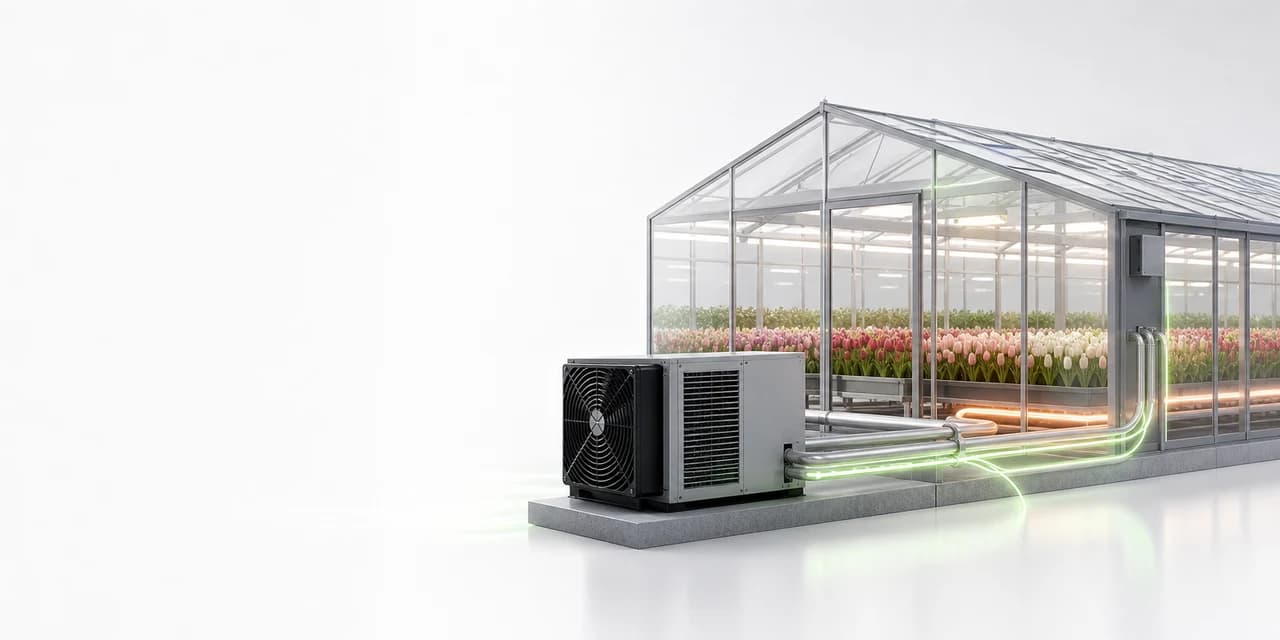
ASIC Heat For Tulip and Commercial Greenhouses
Model controlled miner heat reuse for greenhouses where winter thermal demand, ventilation and humidity can be engineered properly.
- 01
Tulip scenario
Purpose-built for flower and crop sites with winter heat demand.
- 02
Controlled heat
Heat reuse needs airflow, humidity and temperature monitoring.
- 03
Seasonal economics
Winter heating offset is modeled separately from mining income.
Greenhouse operating logic
Useful heat is planned before miner capacity.
A pilot connects energy input, heat delivery and crop conditions in one measurable scope.
- 01Input
Planned ASIC load
Miner capacity starts with usable power and the greenhouse heat baseline.
- 02Transfer
Controlled heat delivery
Air or liquid routes are selected around distance, hygiene and service access.
- 03Growing zone
Measured crop conditions
Temperature, humidity and airflow remain visible before the system is expanded.
Who it is for
A Greenhouse Project Must Protect The Crop And The Mining System
The strongest project route is the one that matches both the operator and the constraints that can stop deployment.
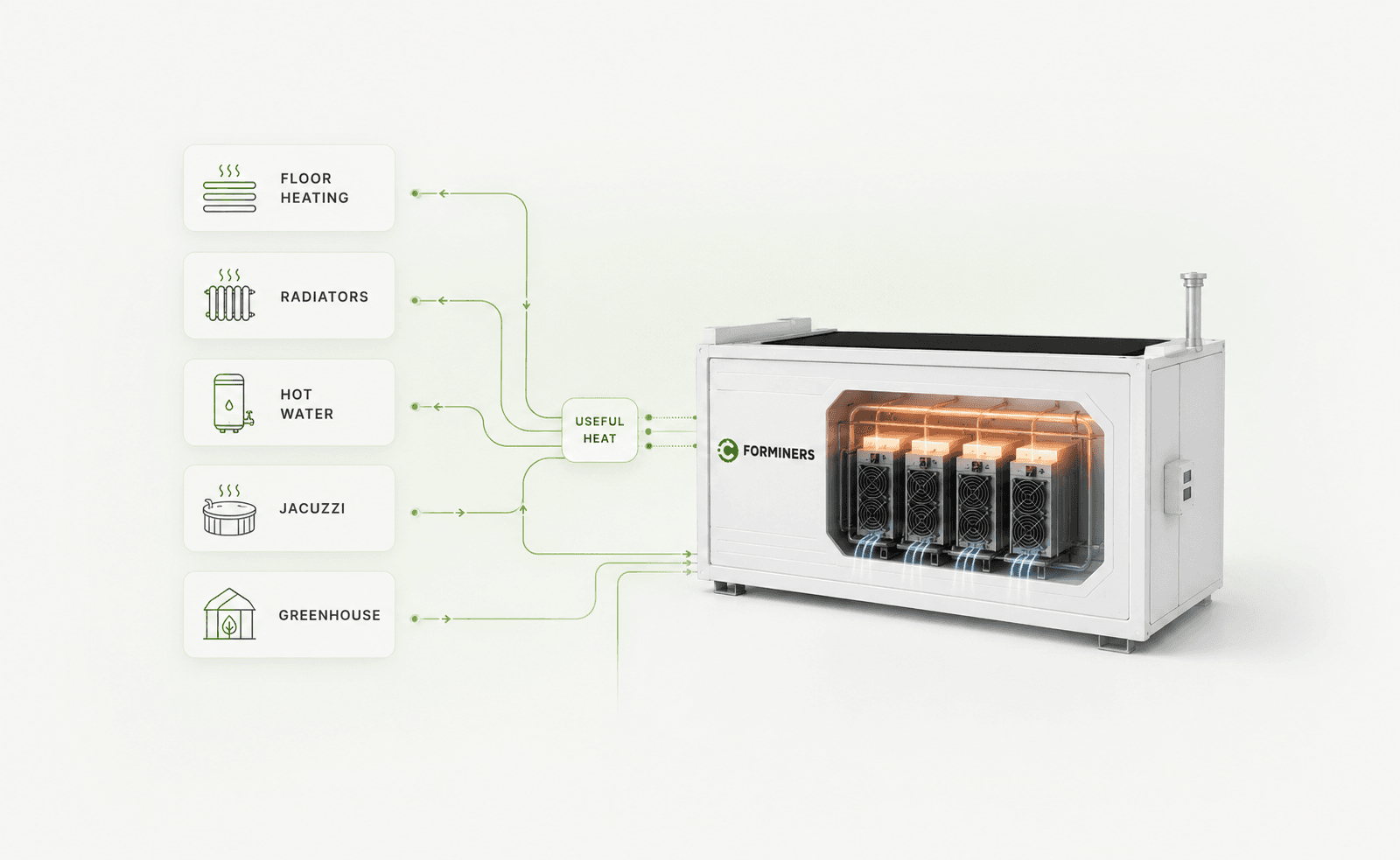
Heat-first planning
Start with the growing environment, not a miner count.
ForMiners maps useful temperature, seasonal demand, air movement and service separation before recommending ASIC capacity or a heat-transfer route.
Tulip greenhouses
Sites needing steady winter heat and practical airflow distribution.
Commercial growers
Operators comparing heat reuse against conventional heating cost.
Energy partners
Solar, CHP or industrial partners with heat and power integration goals.
Constraint to resolve
High winter heat cost
Greenhouses can face large seasonal thermal loads.
Constraint to resolve
Humidity sensitivity
Heat reuse must not create crop, condensation or mold risk.
Constraint to resolve
Operational complexity
Mining equipment must be serviceable without disrupting greenhouse work.
What is included
A Controlled Route From Electrical Load To Useful Greenhouse Heat
The project joins thermal demand, ASIC hardware and greenhouse controls in one measured pilot scope.
Thermal project audit
We review heat demand, humidity, ventilation and electrical capacity.
Heat demand and zones mapped
Controlled distribution
Heat is planned around airflow, ducting or liquid-loop assumptions.
Distribution route defined
Miner and container fit
Hardware, service access and monitoring are selected for the site.
Serviceable equipment layout
Winter economics
Heating offset and mining estimates are modeled as separate, changing variables.
Separate winter economics
Technical considerations
Technical Decisions Before A Commercial Commitment
The proposal becomes useful when the site, equipment and operating responsibilities are explicit.
Crop environment
Temperature, humidity, air movement and filtration must support the growing process.
Seasonal heat balance
Winter demand and summer heat rejection need separate operating assumptions.
Operational separation
Miner maintenance should not disrupt crop handling, hygiene or greenhouse access.
Process
From Greenhouse Audit To Measured Winter Operation
- 1Project step
Assessment
Greenhouse zones, crop needs, humidity, power and the heating baseline are reviewed.
Crop and heat constraints mapped
- 2Project step
Planning
Miner count, heat transfer, ventilation, controls and service access are scoped.
Pilot route selected
- 3Project step
Proposal
The proposed pilot or deployment scope documents thermal and operating assumptions.
Assumptions approved
- 4Project step
Deployment
A controlled installation can validate temperature distribution and site operation.
Heat distribution commissioned
- 5Project step
Monitoring and support
Measured thermal performance and crop conditions inform any later expansion.
Scale decision based on measurements
Deliverables
A Decision-Ready Project Package
The output gives the client, local contractors and the ForMiners team one practical basis for approval and deployment.
Thermal feasibility brief
Heat demand, miner load and seasonal assumptions.
Ready for technical and commercial review
Pilot concept
Equipment, distribution, controls and measurement points for validation.
Ready for technical and commercial review
Scale criteria
Conditions that should be measured before any expansion decision.
Ready for technical and commercial review
Calculator teaser
Estimate greenhouse heat offset
Model the heat before selecting the hardware.
Use the heat reuse calculator to estimate kW output, reusable heat and effective economics.
Estimates support planning; final scope is confirmed during project review.
Related products
ASIC Models To Evaluate For This Project
Compare practical heat output, electrical load and operating characteristics before selecting hardware for the greenhouse pilot.
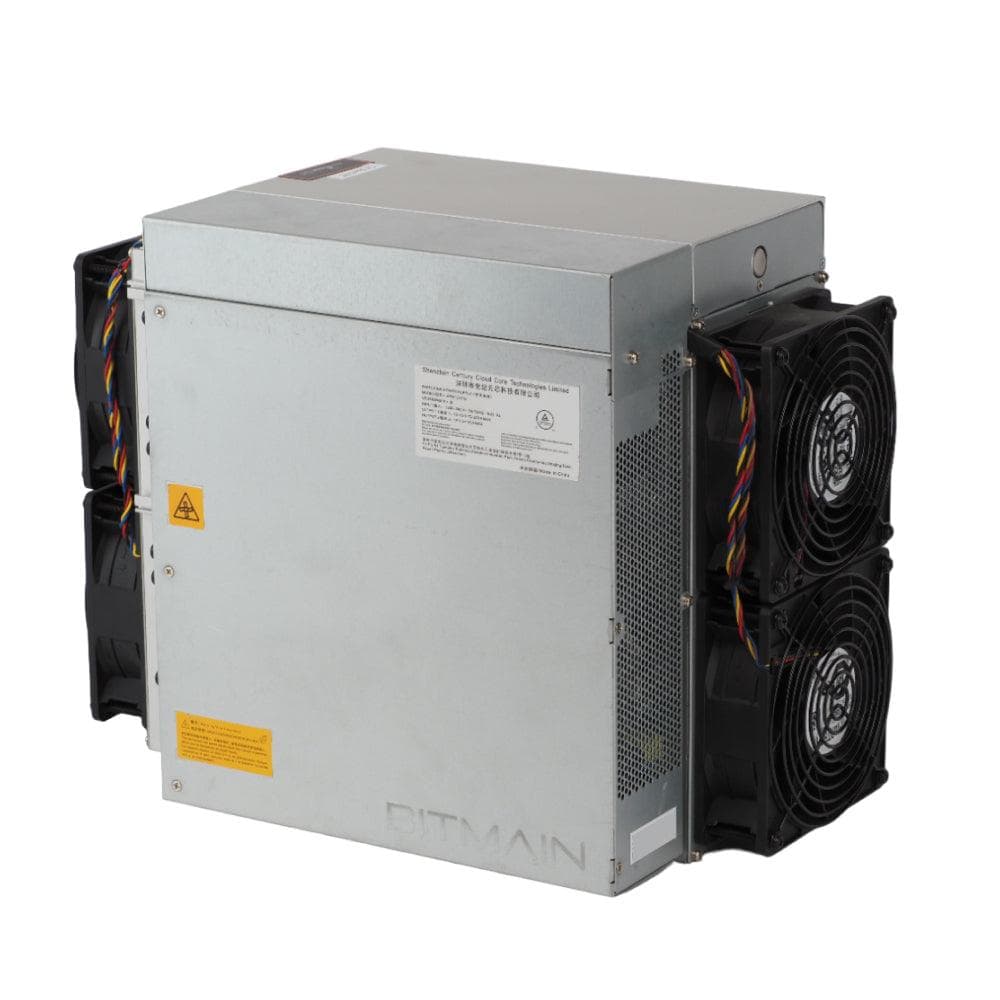
Bitmain Antminer S21 Pro 234 TH/s
SHA-256 | 234 TH/s
- Power
- 3,510 W
- Efficiency
- 15 J/TH
- Noise
- 76 dB
From
€1,899.05
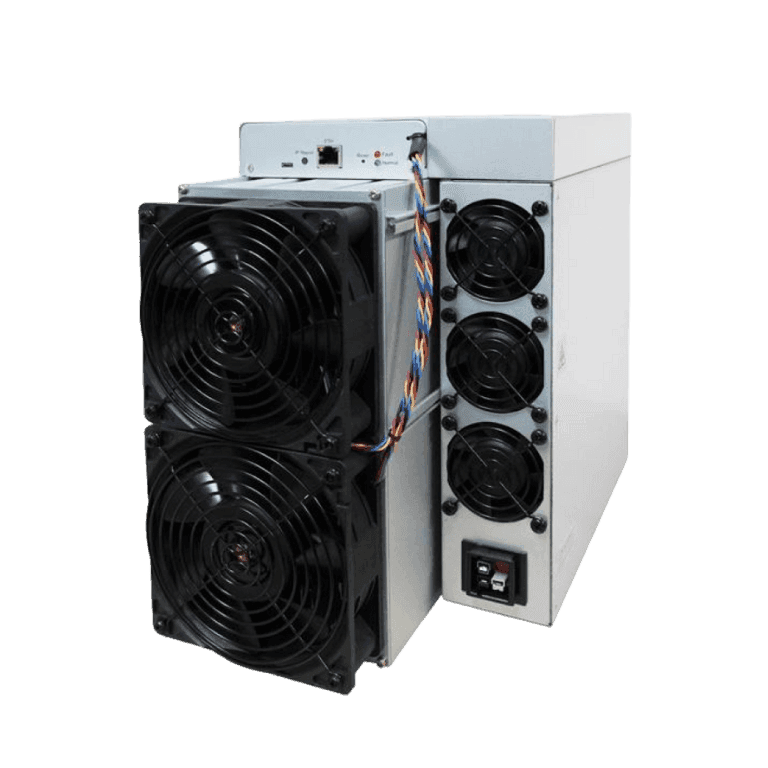
Bitmain Antminer L9 17 GH/s
Scrypt | 17 GH/s
- Power
- 3,360 W
- Efficiency
- 210 J/GH
- Noise
- 75 dB
From
€2,849.05
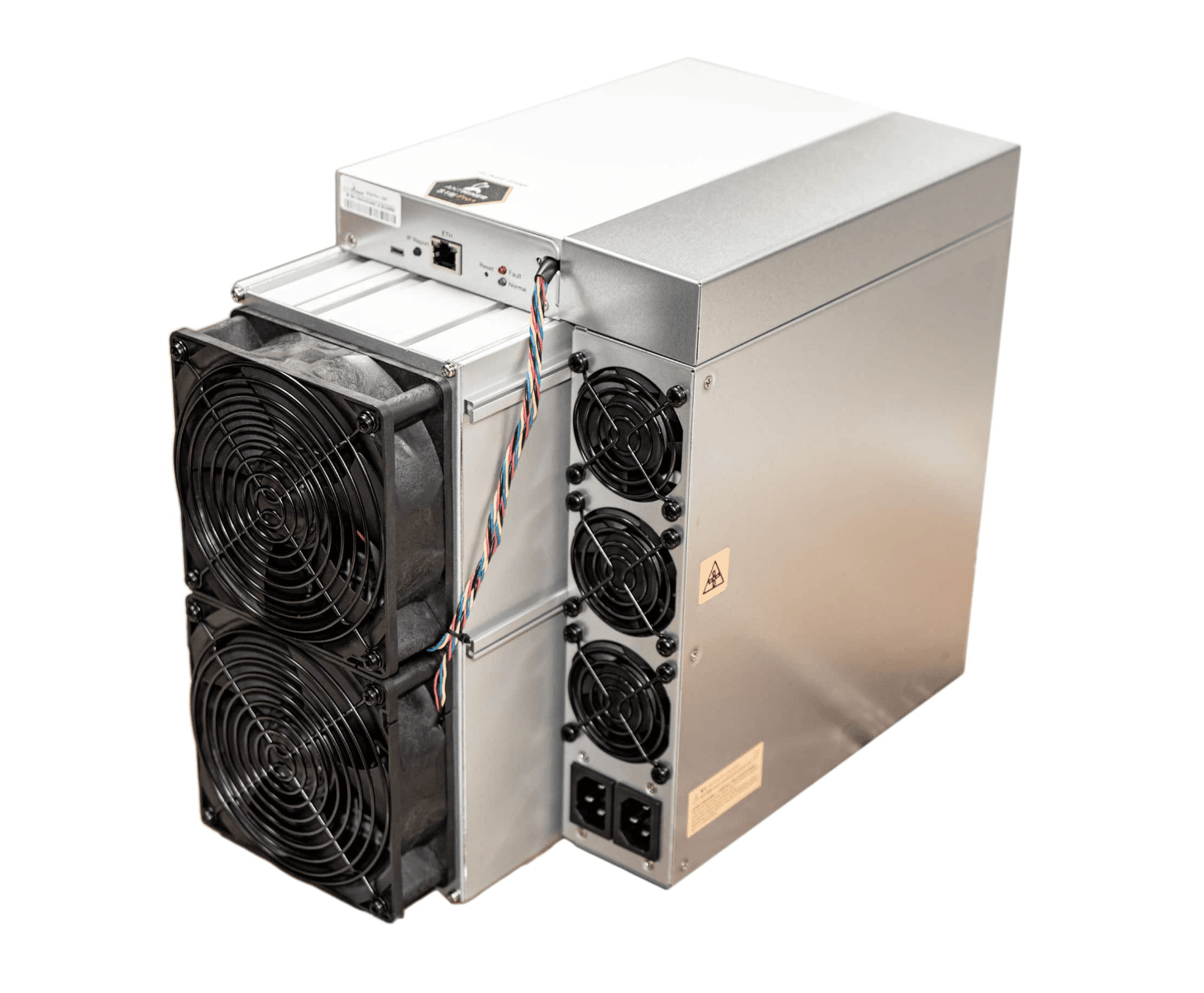
Bitmain Antminer S19k Pro 120 TH/s
SHA-256 | 120 TH/s
- Power
- 2,760 W
- Efficiency
- 23 J/TH
- Noise
- 70 dB
From
€521.55
Model suitability depends on the required heat profile, airflow or liquid-loop design, noise limits, service access and available electrical capacity.
FAQ
Common questions
Can ASIC heat be used directly in a greenhouse?
Is this best in winter?
Do you recommend a pilot?
Project request